Shaker vs flat-panel kitchen doors
The door style you choose shapes the whole feel of the kitchen. Here’s how shaker and flat-panel (slab) doors compare, and how to pick the one that suits your home.
Book a free design consultShaker doors have a recessed centre panel framed by a flat border, giving a timeless, characterful look that suits both classic and modern NZ homes. Flat-panel (slab) doors are a single smooth surface — sleek, minimal and the easiest to clean. Shaker leans traditional and costs a little more; flat-panel leans contemporary and is often the better value. Both are excellent; it comes down to style.
The shaker door
Named after the Shaker community’s simple, functional furniture, the shaker door is defined by its five-piece construction: a flat recessed panel surrounded by a square-edged frame. That subtle shadow line gives depth and craft without fuss, which is why it’s endured for well over a century.
Shaker suits villas, bungalows and country-style homes beautifully, but paired with modern handles (or handleless detailing) and a crisp colour it works just as well in a contemporary build. It’s most often done in a painted finish, and also available in thermoformed for the look at a lower price. The only real downsides are a slightly higher cost and those grooves needing the occasional wipe.
The flat-panel (slab) door
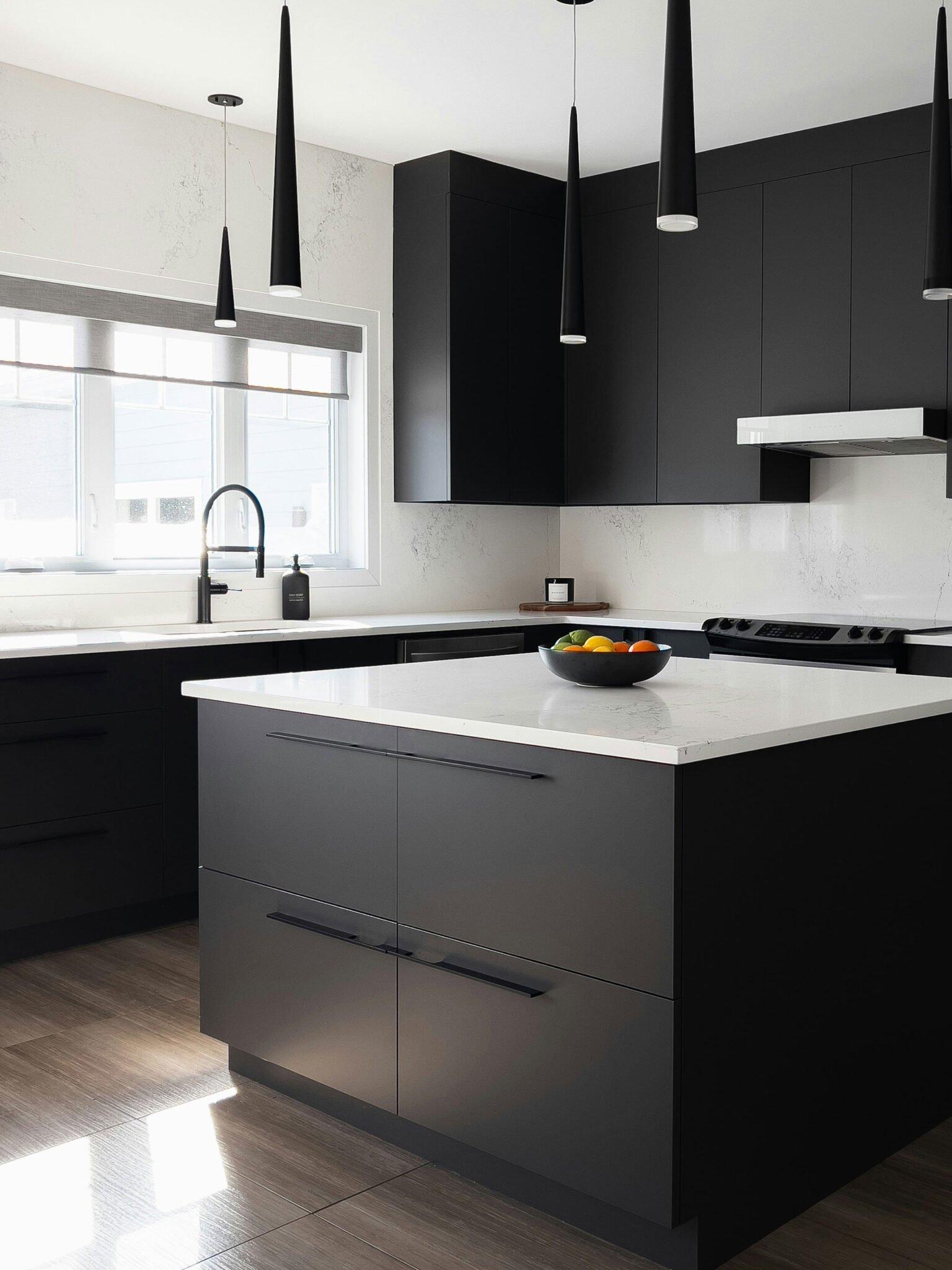
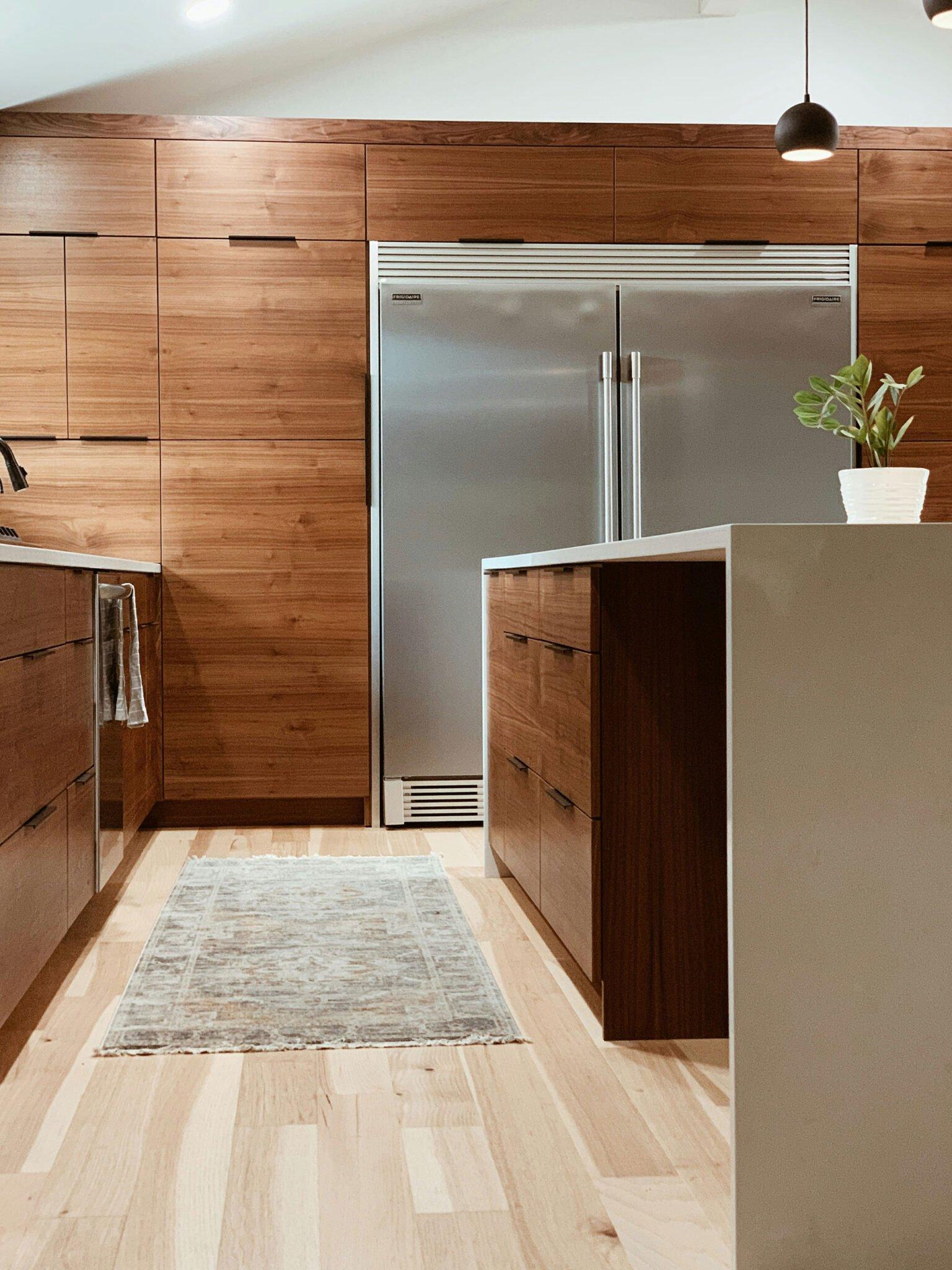
A flat-panel door is exactly that — one clean, flat surface with no profile. It reads as modern, calm and uncluttered, and it’s the natural choice for minimalist and handleless kitchens where you want the materials and lines to do the talking.
Flat-panel is the most versatile across finishes: hard-wearing melamine and woodgrains (great value), sprayed painted colours, realistic timber veneers, or ultra-matte and textured surfaces. Being a single surface, it’s the easiest door to keep clean. In melamine it’s typically the most affordable door you can choose.
Which should you choose?
Choose shaker if you love character, a classic or transitional look, and your home has period features you want to echo. Choose flat-panel if you want a sleek, modern, low-maintenance kitchen or you’re working to a tighter budget. There’s no wrong answer — and if you can’t decide, mixing the two (shaker perimeter, slab island, or the reverse) is a popular way to get the best of both.
Because we design and build every kitchen in our own Rotorua factory, you’re never limited to a fixed catalogue — we’ll make the door style, finish and colour that’s right for your space.
Frequently asked questions
Are shaker or flat-panel doors more expensive?
Are shaker doors harder to clean?
Is shaker style going out of fashion?
Can I mix shaker and flat-panel in one kitchen?
Contact us to transform your kitchen experience
Kitchen Beyond is where your dream kitchen becomes reality — expert planning, quality craftsmanship and a seamless install, all from our own Rotorua factory.