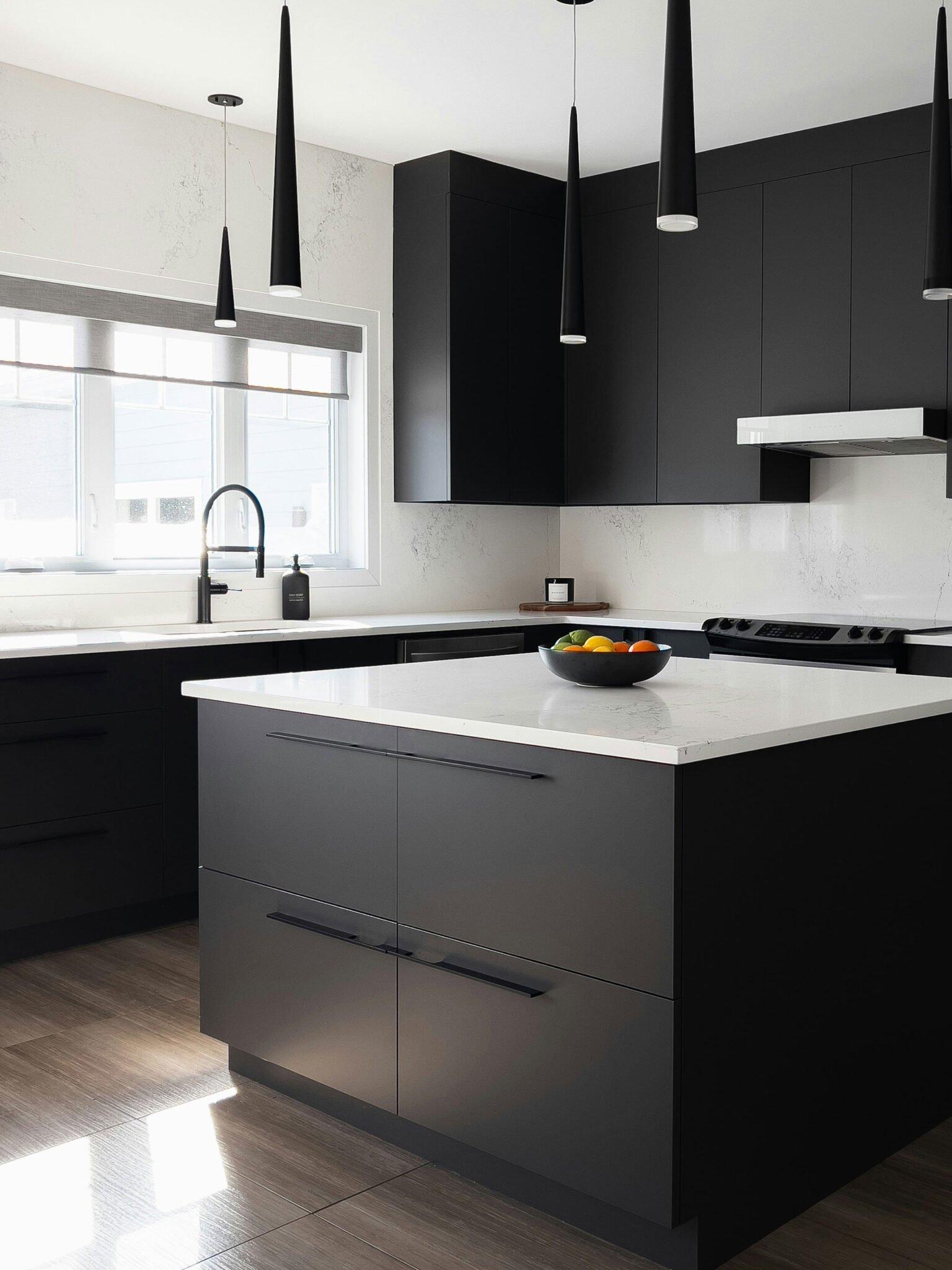
Kitchen benchtops: compare materials & cost
Your benchtop sets the tone for the whole kitchen. Here is how the main materials stack up on looks, durability, care and price in New Zealand.
Book a free design consultThe best kitchen benchtop depends on how you cook and your budget. Engineered stone is the all-rounder most New Zealanders choose — tough, beautiful and low-maintenance. Laminate is the value pick, timber adds warmth, porcelain is the premium performer, and stainless suits serious cooks. Below we compare each on looks, durability, care and cost so you can choose with confidence.
Engineered stone — the popular choice
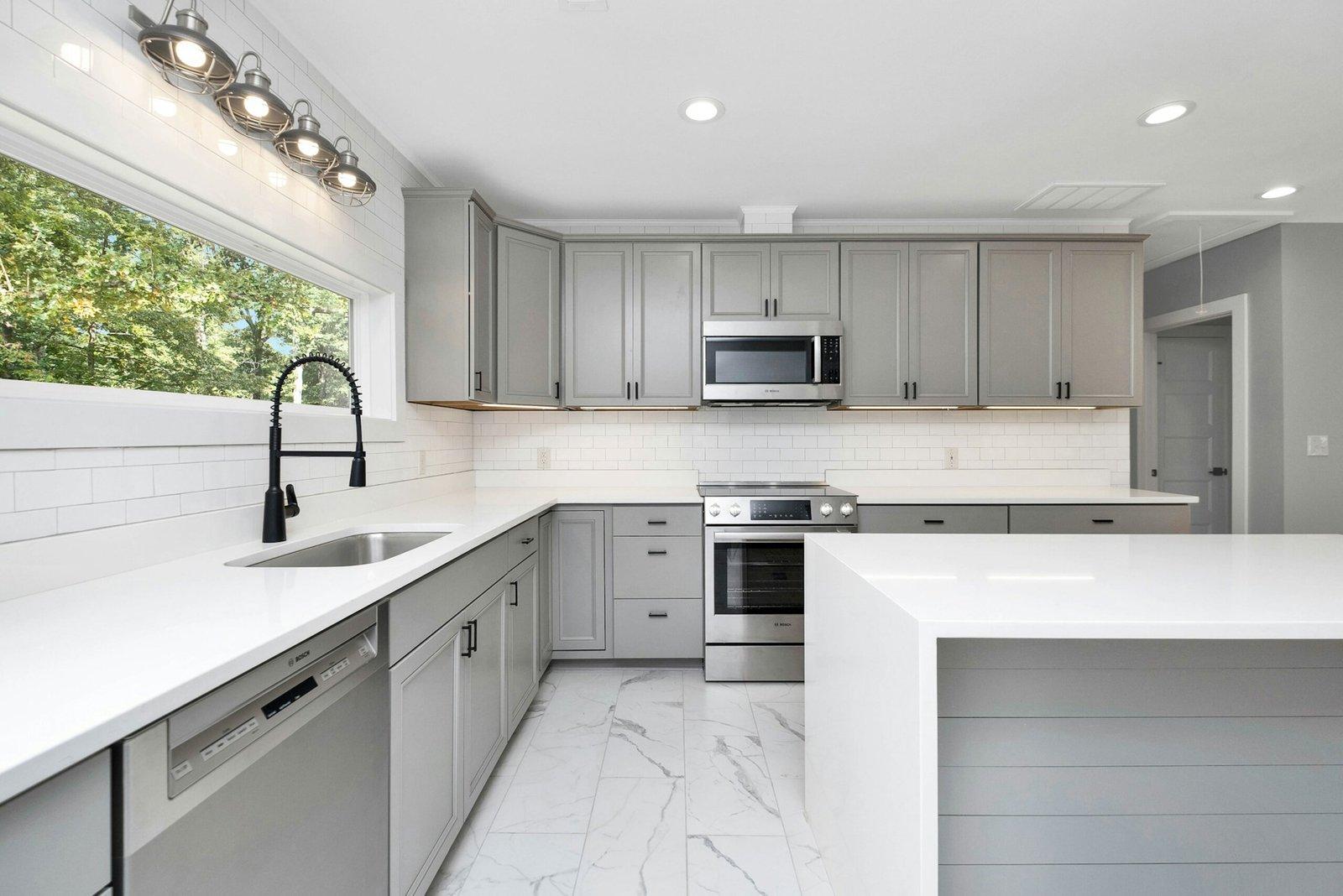
Engineered (composite) stone, from brands like Caesarstone, is a blend of crushed quartz and resin. It gives you the look of natural stone with a harder, non-porous and more consistent surface that shrugs off everyday use.
Expect roughly $500–$1,000+ per square metre supplied and installed, depending on colour, thickness and edge detail. It is scratch and stain resistant, but not heat-proof — always use a trivet. For most of the kitchens we build in our Rotorua factory, engineered stone is the sweet spot of looks, longevity and value.
Laminate — the smart budget option
Laminate has come a long way. Today’s surfaces mimic stone, concrete and timber convincingly, with matte and textured finishes and tidy, near-seamless joins. At roughly $300–$600 per linear metre installed, it is comfortably the most affordable choice and lets you put more of your budget into cabinetry or appliances.
The trade-offs: laminate can be damaged by knives and sustained heat, and a deep chip can’t be repaired the way stone can be polished. For rentals, first homes, laundries and family kitchens on a budget, it is a genuinely sensible pick.
Timber — warmth and character
Solid timber or butcher-block benchtops bring natural warmth that no manufactured surface quite matches, and they can be sanded and re-oiled if they wear. They suit an island, a breakfast bar or a pairing with stone on the main runs.
Timber does need looking after — regular oiling, care around the sink, and a board for chopping. It marks and moves with humidity, so we often use it as a feature rather than wall-to-wall. Pricing sits between laminate and engineered stone depending on the species.
Porcelain — the premium performer
Porcelain (sintered stone) is the toughest surface we fit. It resists scratches, stains, heat and UV, comes in large-format slabs with realistic marble and concrete looks, and can be run in slimline profiles. It is ideal if you want a near-indestructible bench or a statement waterfall island.
It is a premium product — expect to pay more than engineered stone — and it needs skilled fabrication and installation, which we coordinate as part of your build.
Stainless steel — the chef’s choice
Stainless is hygienic, heat-proof and effectively permanent, which is why you see it in commercial kitchens. In the home it gives a clean, professional look, especially paired with a scullery. It does show fingerprints and fine scratches (which settle into a patina over time), so it is a practical rather than soft choice.
Which benchtop suits which kitchen?
If you want the best balance of looks, durability and price, engineered stone is hard to beat. On a tight budget, modern laminate gets you a long way. Want warmth and character? Add a timber island. Chasing the toughest, most luxurious surface? Porcelain. Cooking seriously every day? Stainless in the back kitchen. The right answer is usually a mix, and we help you land on it during your free design consultation.
Frequently asked questions
What is the most popular kitchen benchtop in New Zealand?
How much should I budget for a new benchtop?
Which benchtop is the most durable?
Can I put hot pots straight onto my benchtop?
Contact us to transform your kitchen experience
Kitchen Beyond is where your dream kitchen becomes reality — expert planning, quality craftsmanship and a seamless install, all from our own Rotorua factory.