Hidden sculleries & back kitchens
A show kitchen out front, a working kitchen behind — how pocket doors, matched fronts and full-height panels make a scullery vanish, and what that adds.
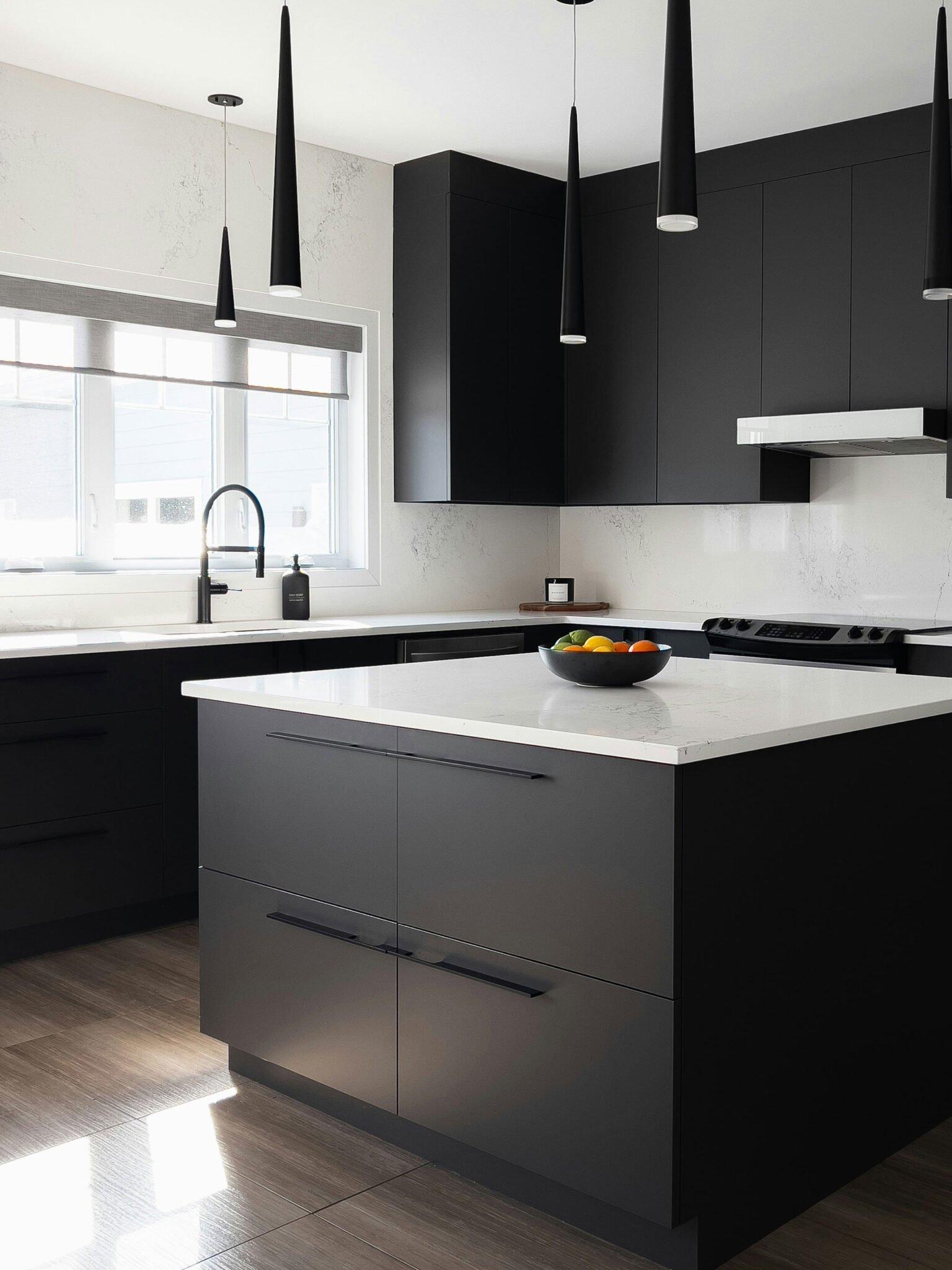
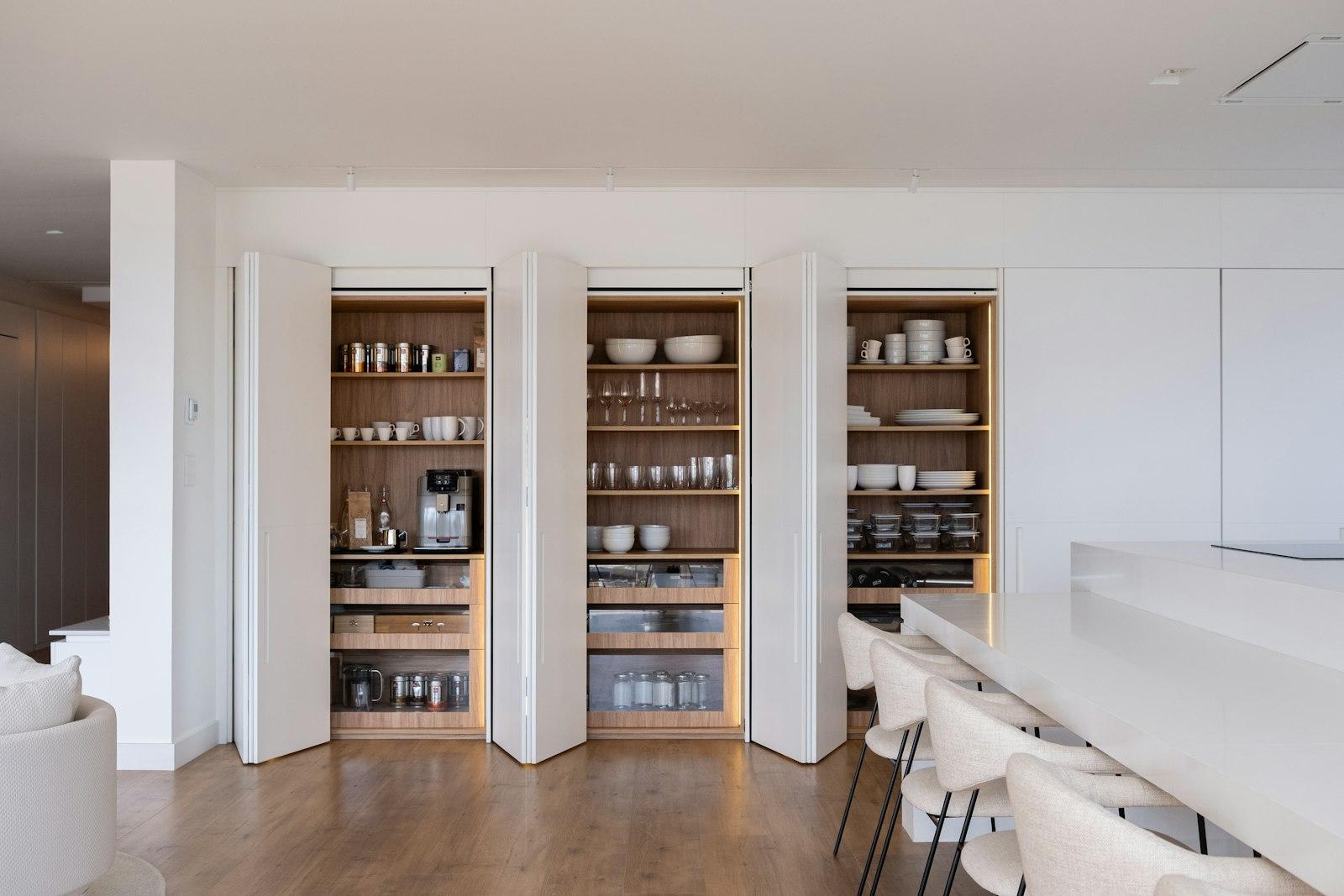
Book a free design consultA hidden scullery gives you two kitchens in one: a clean, sculptural show kitchen for the open-plan space, and a working back kitchen behind it where the sink, the small appliances and the washing up live out of sight. The difference between a hidden scullery and an ordinary one is the entrance — matched fronts, a clever door, and detailing precise enough that the room simply disappears into the cabinetry.
Why the show-kitchen trend took off
As kitchens moved to the centre of open-plan living, the pressure to keep them tidy went up with it. A hidden scullery answers that: the front kitchen holds the island, the cooktop and the beautiful benchtop, while everything that makes mess — prep, dishes, the toaster and the kettle — happens behind a door. You get the calm, uncluttered look without having to live like a showroom.
Three ways to make it disappear
- Pocket or cavity slider: a door that slides into the wall, leaving a clean opening you glide shut when guests arrive. The least fuss and the easiest to walk through with a full tray.
- Tall cabinet doors: a pair of full-height doors with the same fronts as the run beside them, so the entrance reads as more cabinetry until you open it.
- Flush hidden panel: a handleless, push-to-open front that sits perfectly flush in the cabinetry line and vanishes entirely — the most seamless, and the one that demands the most precise joinery.
Getting the detail right
A hidden scullery lives or dies on the detailing. The door fronts have to match the surrounding cabinetry in colour, finish and grain direction; the gaps (the reveals) around the panel have to be even and consistent with the rest of the run; and the handle style — or the absence of one — has to carry across. This is exactly where CNC precision earns its keep: every front cut to the same tolerance, in our own Rotorua factory, so the lines hold true.
What it costs extra
A hidden scullery costs more than an open one because you are paying for the concealment on top of the room — the matched fronts, the slider or hidden-door hardware, and the joinery to make it all align. From our own jobs it is a genuine step up rather than a small add-on, and the exact figure depends on how wide the opening is and how invisible you want the join. We work it through with you and put a fixed written quote in front of you before anything is built.
Where it works — and where it doesn't
A hidden scullery is at its best in open-plan homes where the kitchen is always on show, and in higher-end builds where an uninterrupted cabinetry line is the whole design. If your kitchen is already tucked away in its own room, you are paying for concealment you don't need — a plain open scullery or a cavity slider does the same job for less. We'll be straight with you about which one your home actually calls for.
Frequently asked questions
What is a hidden scullery?
How do you make a scullery disappear?
How much extra does a hidden scullery cost?
Where does a hidden scullery work best?
Does a hidden scullery need ventilation?
Contact us to transform your kitchen experience
Kitchen Beyond is where your dream kitchen becomes reality — expert planning, quality craftsmanship and a seamless install, all from our own Rotorua factory.