Pantry organisation ideas
Zones, shelf depths, drawers and containers — how to set up a pantry that stays organised long after the first tidy-up.
Book a free design consultA well-organised pantry comes down to three things: zones, so everything has a home; the right storage depth, so nothing gets lost at the back; and visibility, so you can see what you have. Containers and labels help, but the biggest gains come from the shelving and drawers themselves — which is why the best pantries are designed, not just tidied.
How should you zone a pantry?
Sort your food the way you use it: breakfast, baking, snacks, tins and jars, pasta and grains, oils and sauces, and bulk spares. Then give each zone a permanent spot. Everyday items belong between waist and eye height. Heavy things — bulk bags, drinks, the rice cooker — go low. Spare stock and party platters go up high.
Keep a snack zone low and easy to reach if you have kids, and put anything you'd rather they didn't help themselves to up out of the way.
What shelf depth works best?
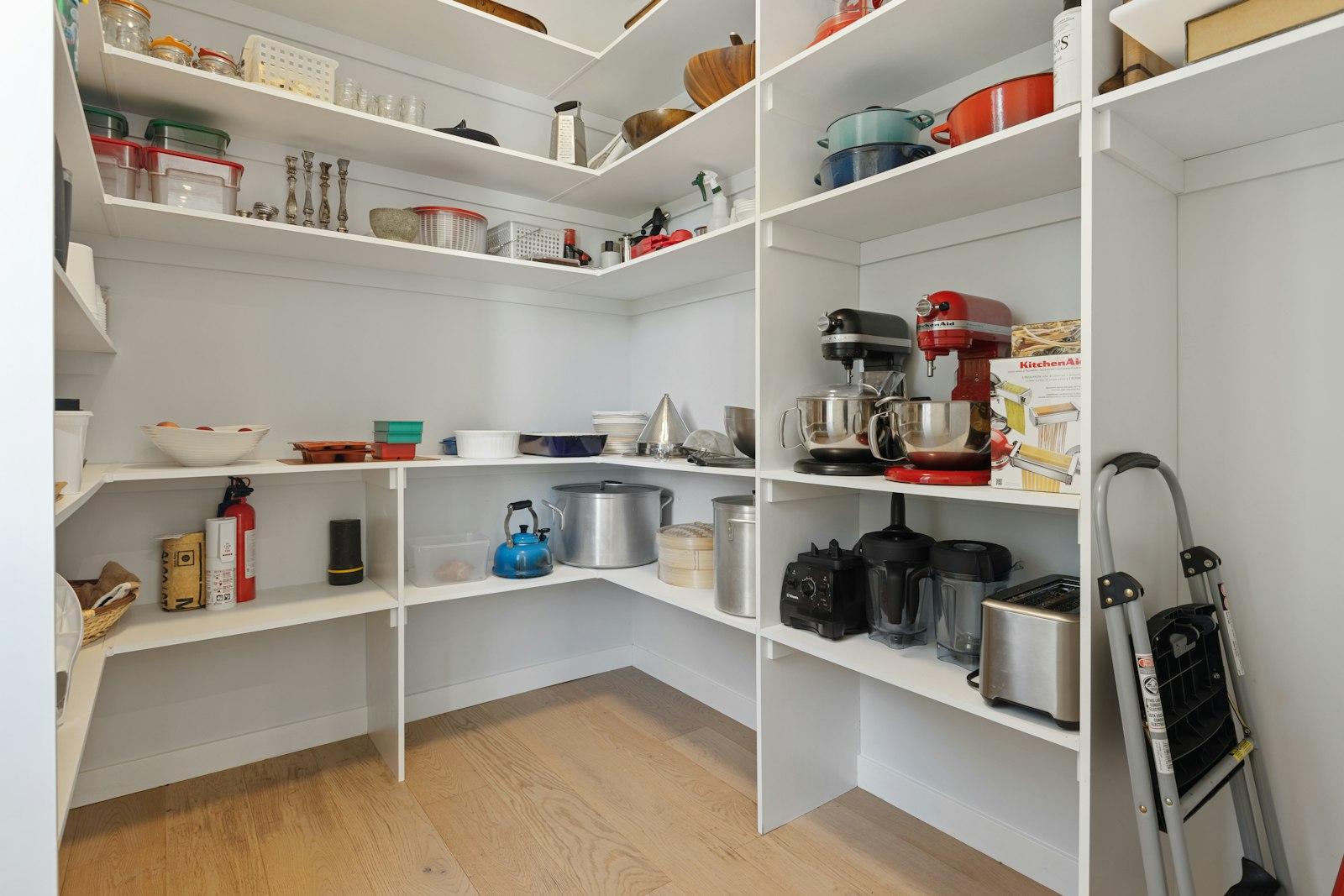
Shelves of around 300–400mm suit most pantry items — deep enough for cereal boxes, shallow enough that nothing hides behind. Very deep shelves are the main reason pantries become cluttered. If you're designing a new pantry, mix shallower shelves at eye height with deeper ones or drawers lower down.
Why use drawers in a pantry?
Drawers bring the back of the cupboard to you. In the lower half of a pantry they're far easier to use than shelves — you look down into them and see everything at once. Deep drawers suit bulk packets, potatoes and onions, and drinks; shallow drawers are great for spices, packets and sachets.
Where there's no room for a walk-in pantry, a tall pull-out pantry does the same job in a slim space, with access from both sides.
Which containers and accessories actually help?
Clear, airtight, square containers for dry staples. Tiered risers for tins and jars. Turntables in corners. Baskets or bins for loose packets and snacks. Door racks for spices. Label the containers and the shelf edges — it's what keeps the system working when someone else unpacks the shopping.
When is it time to redesign the pantry itself?
If you're constantly reorganising, the problem is usually the pantry, not the contents — shelves that are too deep, a blind corner, or simply not enough space. A custom pantry or scullery, planned around what you actually store, fixes that for good. It's one of the most common upgrades we build alongside a new kitchen.
Frequently asked questions
What is the best way to organise a pantry?
How deep should pantry shelves be?
Are pull-out drawers better than shelves in a pantry?
Should I decant food into containers?
How do I organise a small pantry cupboard?
Want a pantry that stays organised?
We design and build pantries and sculleries around what you actually store. Book a free in-home consultation and get a clear fixed quote.